DNS Record Types Explained
Understanding DNS records and how they help your computer find the right website address.

Full-stack developer and startup founder building tech solutions in Ayodhya. Vlogger with 27k+ followers sharing my journey in technology and SaaS.
How Does the Internet Know Where a Website Lives?
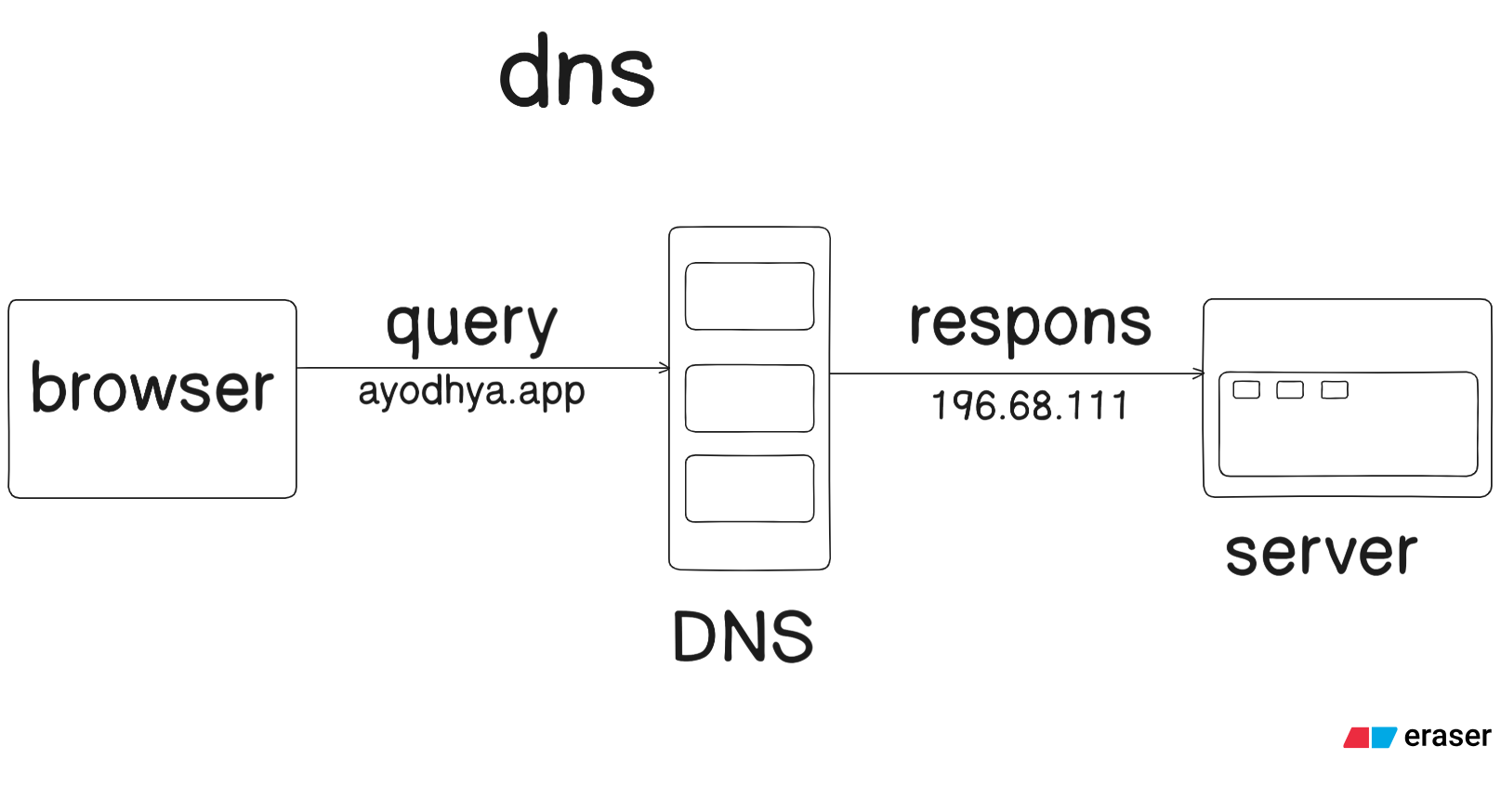
How does the Internet know where a website is located? It's a bit like finding a friend's address. Every website has a unique IP address, which is an address made up of numbers. When you type in a domain name, a DNS (Domain Name System) looks up the corresponding IP address. In this way, it works like the internet's phone book.
DNS: The Big Phonebook of the Internet
DNS( Domain Name System ), works like the internet's phone book. Just as your phone book contains your friends' names and their phone numbers, DNS stores website names and their corresponding IP addresses. When you type a website name, DNS translates that name into an IP address or redirects you to it so you can access the website.
Why Do We Need These Things Called DNS Records?
DNS records are very important because they tell the internet where to find a website. Without them, you would have to remember complicated IP addresses, which is practically impossible.
It also helps the internet function properly. Simply put, it's the internet's phone book. Just as a phone book lists names alongside phone numbers, DNS records link domain names like www.google.com to their corresponding IP addresses, allowing computers to find those websites. Without it, you would have to remember the IP address of every website you wanted to visit.
NS Record: Who is the Boss of the Domain?
The NS record is an important part of the Domain Name System (DNS) and helps the Internet determine which name server is authoritative for a particular domain. In simpler terms, if we buy a domain name for a website, such as ayodhya.in, the NS record tells us which company owns or manages that domain. It points to the name server of that company. The name server then provides the IP address of the website.
A Record
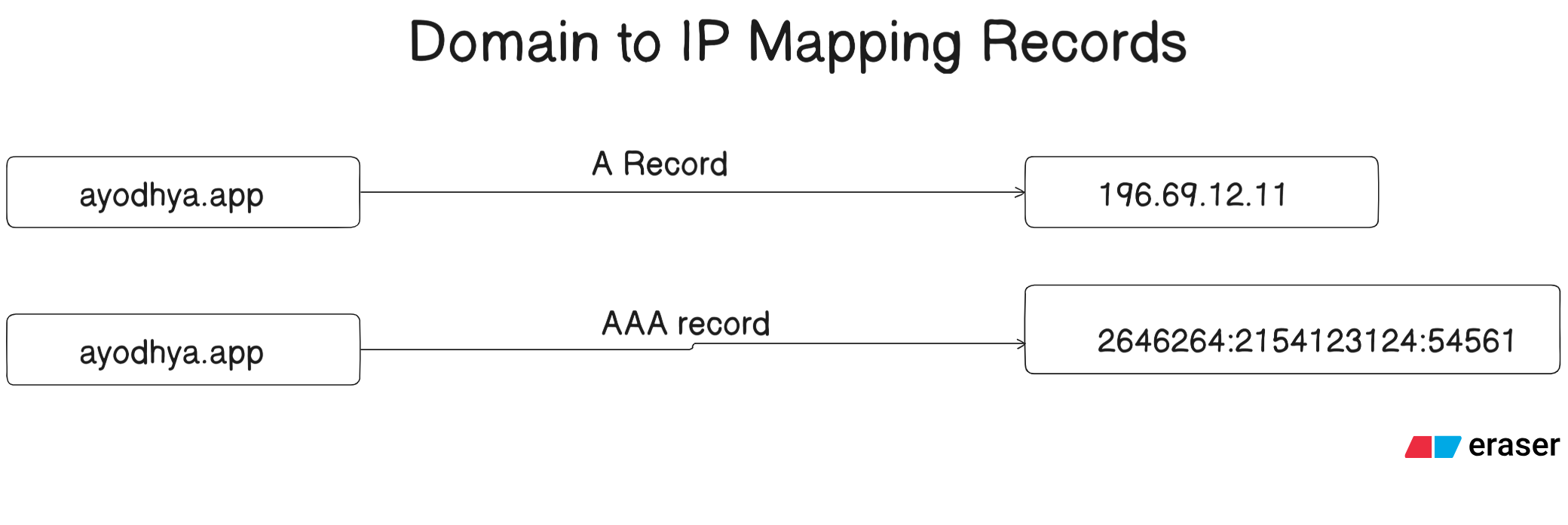
An A record, also known as an address record, is the most basic record in DNS. Its main function is to associate a domain name with its IP address. For example, if we type ayodhya.in, it determines or ensures that the IP address of its website is located and points to that specific address.
This record works like a phone book; just as you know a friend's name and look in a directory to find their address, this record looks up the correct IP address for a domain name when you type it in, so that your computer can connect to it. This process is very fast.
AAAA Record: The New, Longer Address (IPv6)
An AAAA record is also called a quad-A record, or it's similar to an A record, but it associates a domain name with an IPv6 address. IPv6 is the latest version of the Internet Protocol, meaning that while previous IP addresses were shorter, with the advent of IPv6, the IP addresses of domains became significantly longer.
CNAME Record: Giving One Name a Nickname
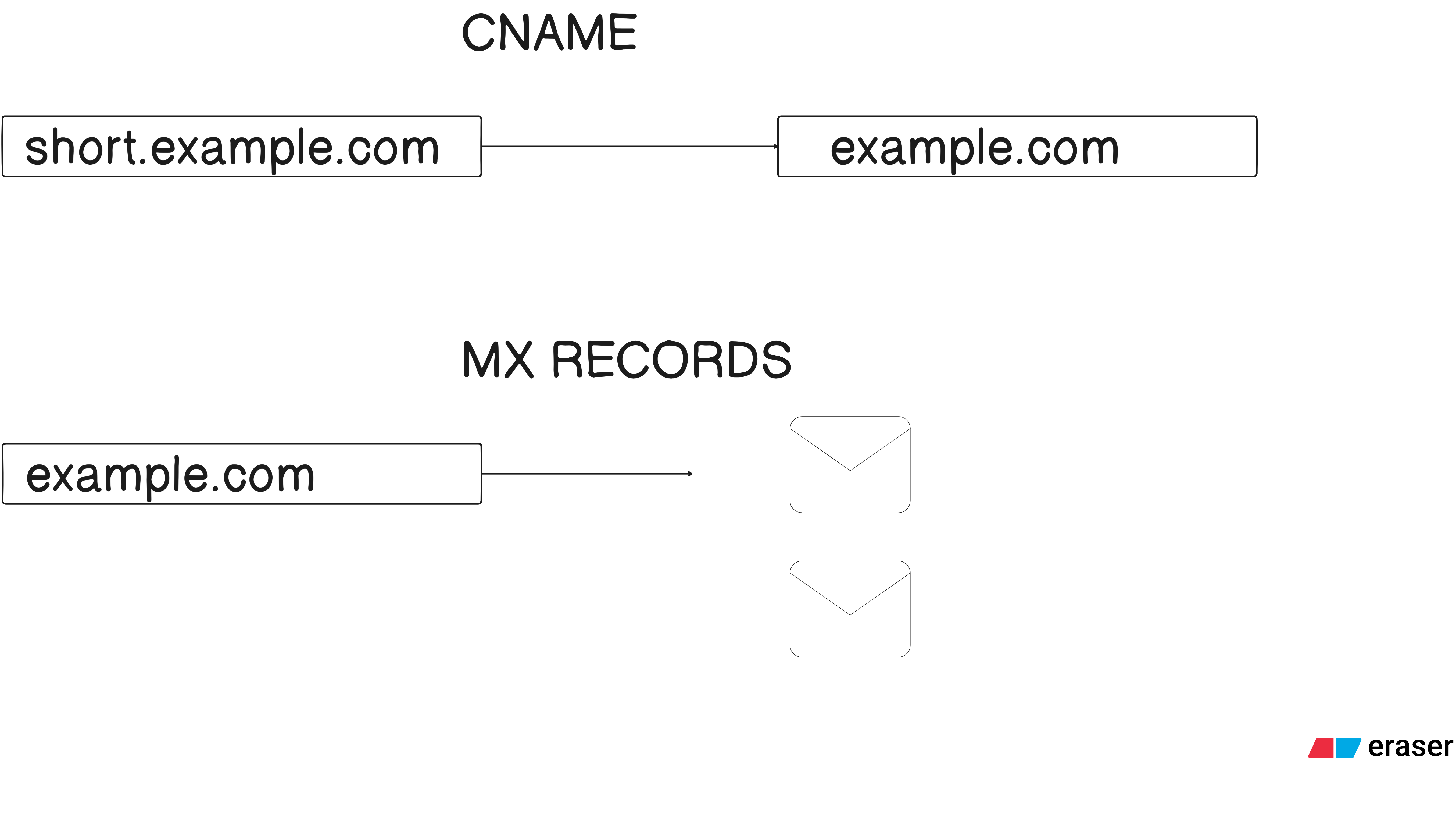
A CNAME record is a type of alias record; it links one domain name to another domain name. It maps one domain name to another domain. A CNAME record helps in creating domain aliases. You can think of it as a shortcut. For example, if your website is example.com and you want to create a subdomain, you would add a CNAME record that points to, say, blog.example.com. This eliminates the need to repeatedly enter the same information.
MX Record: How the Mailman Finds Your Email Inbox
An MX record is a type of DNS record that is associated with receiving and sending email messages for a domain. In simpler terms, it determines which server will receive emails sent to your domain.We can create email addresses like admin@example.com using MX records. If someone sends an email to this address, it will point to our website's server, and we can then receive it.
TXT Record: The Sticky Note for Extra Information
A TXT record is a type of digital record associated with your domain. It contains specific information that tells the server what to do with your domain, or it is often used for security purposes, such as ensuring that no one can send fake emails using your name. Primarily, it's used to store text data that is utilized for security and verification purposes, such as SPF or DKIM records.
Putting it Together: How All These Records Help One Website
These are all important parts of DNS records. The A record primarily links a domain to an IP address so that when someone types your website name, they reach the correct server. The CNAME record acts like an alias; it can link one domain to another. The AAAA record is similar to the A record but is for IPv6 addresses. A records and TXT records, together, form a strong foundation for your website. The A record ensures that emails sent to your domain reach the correct destination, keeping your important communications flowing smoothly. The TXT record enhances security and authentication, helping to protect your website and your data.
Together, these create an efficient and organized domain name system.


